Fender Serial Number Database
Fender Product Registration - Serial number lookup. When it comes to vintage, Fender immediately springs to mind. Even though you can easily find vintage Ricks, Gibsons and Hofners, Fender seems to own 90% of the vintage attention. Old Precision and Jazz basses are the holy grail to some bass players, and one thing that also keeps popping up in any Fender-related.
Click to expand.humm thank you for your input and amazing insight. What about the people that dont know any better and are interested in looking up to see if they are being sold the true thing or not? Sure they can use fenders website as pointed out gracefully by another member, or they could use the dater project, ive seen on plenty of web sites where people bicker over the way to 'properly read' a serial number, and this tool seems to help you do some research into what youve heard. If i had submitted the idea that this was a tell all only source with the best information available to human eyes and hands, then sure, the retoric would be a welcome push in the right direction.
I found this to be interesting. So if human kind has shown me anything, there are others that will find this interesting, and others that will crap talk all over it. Pluraleyes crack mac. Humm thank you for your input and amazing insight. What about the people that dont know any better and are interested in looking up to see if they are being sold the true thing or not? Sure they can use fenders website as pointed out gracefully by another member, or they could use the dater project, ive seen on plenty of web sites where people bicker over the way to 'properly read' a serial number, and this tool seems to help you do some research into what youve heard. If i had submitted the idea that this was a tell all only source with the best information available to human eyes and hands, then sure, the retoric would be a welcome push in the right direction.
I found this to be interesting. So if human kind has shown me anything, there are others that will find this interesting, and others that will crap talk all over it.
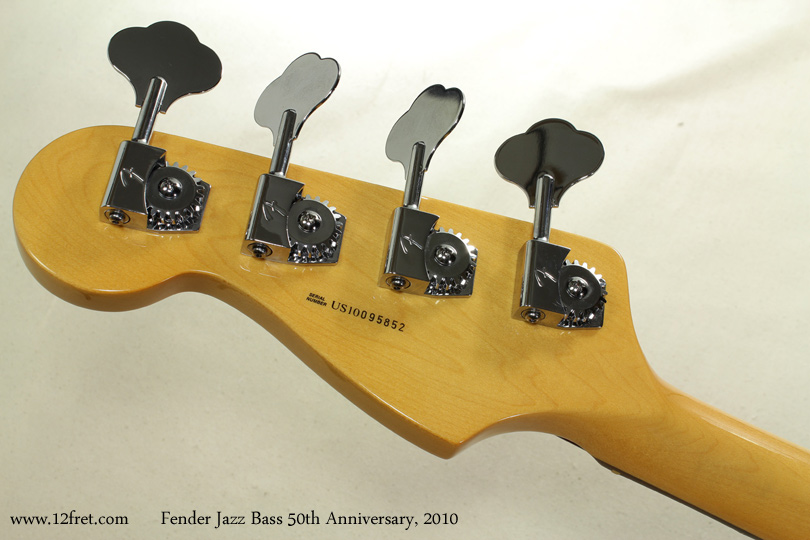
Click to expand.Fender used to use extra prefix letters on some series - they used the 'S' in front of the 'normal' 2-character year code on Artist series guitars, and they used a 'D' in front of the 2-character year code on American Deluxe models. However, they stopped doing this in 2010 when they changed their serial number formats. So an 'SN6xxxxxx' serial number would be for an Artist Series model made roughly during 1996 (per the 'N6' part). Of course there are overlaps, but it seem like during the period from about 1995 through 2009 the 'annual serial number changeover' for USA instruments happened in January of any given year. Now the annual 'serial number changeover' seems to happen in March of a given year - Fender used 2 different formats in 2010, settling on their current 'USYYxxxxxx' format in April of 2010 (with 'US10xxxxxx' as the April 2010-March 2011 format, etc.). On MIM Artist Models like the Jimmie Vaughan you used to see serial numbers like 'SMZ1xxxxxx' for a 2001-2002 model - 'S' for 'Artist Series', 'M' for 'Made in Mexico', and 'Z1' for '2001'.

Plus on the MIMs the serial numbers seem to do their 'changeovers' in June/July of a given year. In July 2010 the MIMs went to a similar format to the USA models - they began using an 'MX10xxxxxx' format and stopped putting that extra 'S' on the MIM Artist models.
And this is why people have fallen out of using sites like Guitar Dater Project - it won't recognize any legitimate Fender serial number after 2009. Plus all it does is tell you that the format is what any company used; you still have to contact the manufacturer (Fender, Gibson, etc.) for a verification of the instrument. Some of the fakers out there do use legit serial number formats so they pass the serial number search test.
So you need to figure out the year of production for your guitar or bass. You're not alone. Fenders rank as the most frequently bought and sold instruments on Reverb, and finding a precise date of manufacture can be key to determining the value and specifics of an instrument. The most important thing to keep in mind when dating a Fender is the highly modular nature of the designs. Like Henry Ford, part of Leo Fender's genius was in optimizing the company's production efficiency. His guitars were built en masse by an entire factory, not a single luthier toiling over one instrument at a time. Features like bolt-on necks and pickups wired into the pickguard all helped the Fender factory churn out guitar after guitar, day after day.
This also means that various parts used on a particular guitar may have come from different points in time, so no single number can absolutely define when the instrument was built. Instead, the best approach to dating a Fender is to combine indicators from the design of the instrument, the dates found on the neck and body, along with the serial number.
Design Changes and Features Perhaps the best place to start when dating your Fender is to get an approximate idea of the era based on the instrument's design and components. This can be a tall order for someone less versed in guitar history, but we do have some resources here on Reverb to help you out. For starters, there's the Reverb Price Guide which has thousands of entries with pictures and details on various guitars and other gear. Some browsing around the can definitely help you find which model you have. We also have some other blog posts related to Fender that can hopefully be of some help. There's and that follows the evolution of the most popular Fender guitar of all. Similarly, take a look at for general timeline of the history of everyone's favorite offset guitar.
For Fender during the turning point era of the mid-'60s, check out Body and Neck Dates Through much of Fender's production history, Fender workers would print or write a production date on both bodies and necks where the two pieces meet. These dates will tell when the original part was manufactured, but are not exact indicators of when the guitar was actually put together and finished. Here is what the neck date and body date look like from a 1952 Telecaster: If you're not comfortable removing the neck of a guitar to peek at the date marker, I encourage you to take it to a local tech or luthier.

I will also mention briefly pot-codes as a resource (numbers on the internal potentiometers of the guitar). These can definitely be useful in cases where no other numbers exist, but just tell when the pot itself was made. Who knows how long it was waiting in the Fender factory before finding its way into a Tele? Serial Numbers Like the body and neck dates, using serial numbers to date a Fender is not a sure bet.
At many points in Fender's history, serial number usage overlapped again owing to the modular manner of production. Below we'll go into detail about the various serial number schemes employed by Fender as far back as 1950. There are certainly plenty of exceptions, so again, using serial numbers in conjunction with other dating methods is always the best bet.
Click on the links here to jump directly to the serial number style that matches your instrument:. Post 1976 Starting in 1976, Fender transitioned to a new serial number scheme and moved the placement of most serial numbers to the headstock of the instrument.
Depending on the era and model, the number can be found on either the front or back of the headstock. After a short period of overlap with the old system, the post-76 numbers will start with a letter that indicates the decade, followed by a number that indicates the year of that decade.
The decade letter codes break down like this: S = 1970s, E = 1980s, N = 1990s, Z = 2000s. In the 2000s, you'll also see serials starting with a DZ which indicates the Deluxe series, but the format is otherwise the same. For example, a serial number with N4 would be from 1994. One starting with Z5 would be from 2005. This scheme is not 100% consistent due to a number of production factors, such as Fender producing more serialized decals than needed in a given year. This is particularly pronounced in the transitional period of the mid-'80s, though the system has been pretty much on point since about 1990. After 2009, the letter changed to a format starting with US then two digits that tell the year of the current decade.
Here's the breakdown of Post-1976 American-made Fender serials. Made in Japan Fender Serials Fender Japan serial numbers can usually be found on the back of the neck near the neck joint.
Fender Serial Number Lookup Mexico
Though examples also exist with the number on the headstock or the neck-plate in the case of certain early reissue models. Up until 1997, the serial was paired with the words 'Made in Japan.' In 1982, Fender expanded operations with a series of instruments produced in Japan by the Fuji Gen Gakki company.
Like the US serial numbers, MIJ (made in Japan) serials start with a letter or pair of letters that indicate the rough year of production. This system, however, is notoriously inconsistent and incomplete, which makes dating by serial number even less reliable for MIJ Fenders. Here's a breakdown of serials for the 'Made in Japan' era. Made in Mexico Fender Serials Fender opened a factory in Ensenada, Mexico in the late '80s and instruments started coming off the line in 1990. Mexican-made (MIM) Fenders carry a serial number on the headstock starting with an M. Some exceptions include a handful of special editions and signature models as well as the split US/Mexican-made California series which all have a 'AMXN' at the beginning of their serials. The MIM serial number scheme is actually very straight-forward.
For Mexican Fenders made in the 1990s, the serial will start with an MN followed by a number that indicates the year of the decade. Instruments made in the 2000s follow the same form but start with MZ.
Fender Guitar Serial Number Database
For the 2010s, the prefix is MX1. For example, a serial number starting with MN2 would be 1992. Here's the serial number breakdown for a majority of MIM Fenders. Exceptions There are a number of exceptions to all these serial number schemes.
As mentioned above, many reissue models use serial numbers that don't really correlate to their age. Additionally, there have been plenty of artist models, limited editions and other rare models that use a unique serial number. Examples include the 35th anniversary series, many of the uniquely finished Strats from the early '80s, as well as various export-specific models which carry a serial number starting with FN. Again, the serial number alone in any of these cases is not definitive and the best approach is to combine that with other methods like the neck and body dates, as well as just the features of the specific instrument. If you have any questions as to what Fender you're dealing with, I encourage you to seek out a local guitar shop or luthier to help figure it out.