Giddings And Lewis Horizontal Boring Mill Manual
Milling machines Milling machines are vital tools when it comes to working on wood, metal, and other solid materials. Usually automated, these machines can be positioned in a flat or vertical orientation to carve out material depending on a pre-existing design. While traditionally and manually automated devices are still common, most modern machines are computer operated, CNC, with computer-aided designs, CAD. What are the available types of milling machines? Milling machines are categorized based on their orientation to the workpiece and degree of motion. Here are some common types of these machines that you can choose from: Plain horizontal and vertical: This mill has the tooling assembly affixed to a swivel and turret positioned parallel to the workspace. Universal horizontal machine: This has a table spin housing that allows the table to shift out 45 degrees from the flat position.
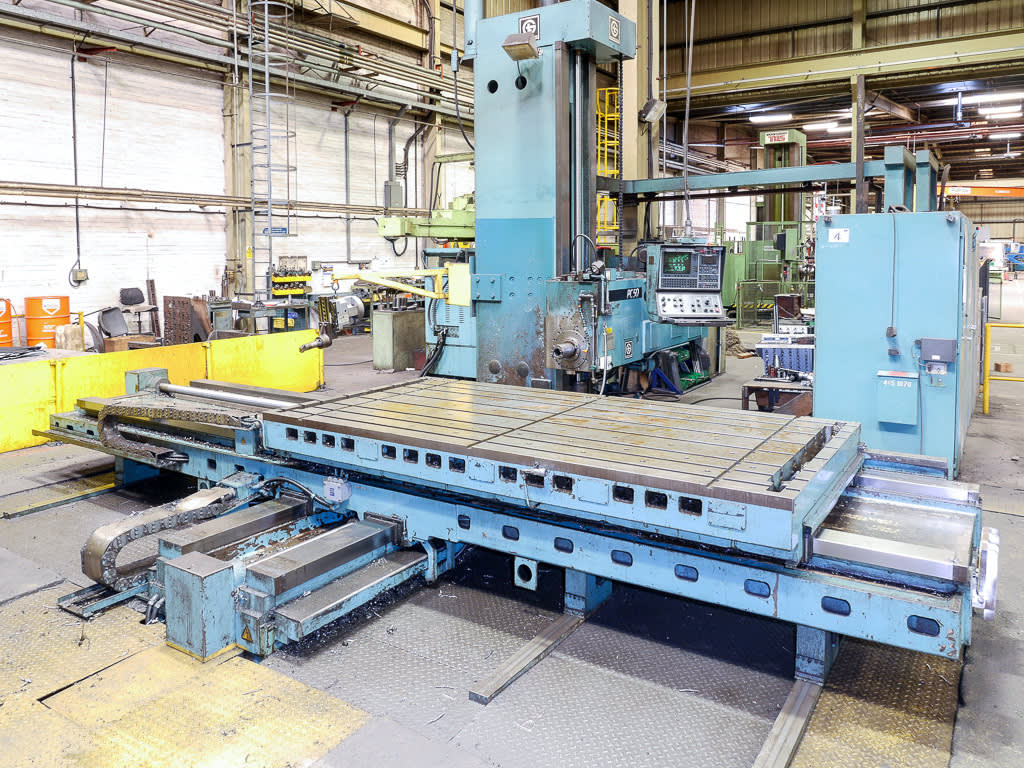
Used Giddings & Lewis (G&L) Boring Mills—Machinery Repairs, Rebuilds and Sales. Find Giddings & Lewis Boring Mills and Other Machinery with Help from Abbott Machine Company. Our inventory of parts for used Giddings & Lewis (G & L) Boring Mills and other leading manufacturers.
One of these licenses in combination with a standard Core license gives one Universal license. Do NOT use this for upgrades from prior version of AXIS Camera Station. E-License article number: 0879-030. Printed license article number (Not available in North America, please use eLicenses in this region instead): 1-pack,. AXIS Camera Station is the ideal solution to meet the needs for efficient surveillance of small- and midsized installations, such as retail shops, hotels, schools and manufacturing sites – a proven solution with more than 50,000 installations worldwide. It is designed to perfectly match Axis' wide range of network video. After adding devices to the AXIS Camera Station program you will be asked to register your license in order to activate the full version (not applicable for the demo version). Follow the instructions below depending on whether you have direct Internet access or not, from the computer where the AXIS Camera Station program. Axis camera station license serial numbers.
Giddings And Lewis Horizontal Boring Mill Manual
The workpiece movement allows for seamless helical or angular mill operations. Knee-type mill: This employs a vertical workspace supported by the knee, an adjustable perpendicular casting that can be customized for the workspace. Swivel cutter head ram-type mill: This can rotate from a vertical to a level position as the worktable moves to provide a liberal degree of orientation and motion. Universal ram-type machines: This is used to allow the tooling position itself on a greater space range in relation to the workpiece. Milling can help create a wide range of features on a part by cutting away the unnecessary material. This process requires a mill machine, fixture, workpiece, and cutter where the workpiece refers to a pre-shaped material secured to the fixture.

For more versatility and power, incorporate a Bridgeport milling machine. CNC machines have the ability to vertically move the spindle along the Z-axis. How do you operate a milling machine?
A milling machine is an integral part of any machine shop because of its versatility and power. To effectively run one, you need a clear understanding of basic machining concepts.
Operating it requires thoroughness, patience, and experience. The following steps will prove helpful when operating a common milling machine:. Connect the main machine to the main power. Turn on the spindle using the switch on the machine’s head.
This is activated when the switch is turned to the right in a clockwise direction provided the motor is in high gear. Set the required revolutions per minute, RPMs, for the tool using the speed control wheel. It is advisable to adjust the speed before inserting the tool as this may be set immediately, loosening the tool when you start it. Insert the tool into the spindle by loosening the drawbar. Slot in the collet and retighten the bar to keep the tool secure. Clear off debris from the table and attach a vise to ensure that it is flat for accurate cuts.
Secure the work-holding fixture or vise using T-nuts in the slots and tram the vise to make it straight. The dial indicator helps you get an accurate X-axis when swept across the front to tram the vise. Use a coolant when cutting by attaching a mister or using a hand-held spray coolant bottle to keep everything cool. Run the drills and endmills at the appropriate feed rates, and ensure that RPMs are correctly set based on the tool and the material you are working on.
Search Machinery: By: You are viewing a list of sold machinery in the NetMachinery Sold Archive. If you are looking for available machinery click We found 54 matching ads. Now displaying the remaining 54 ads.